
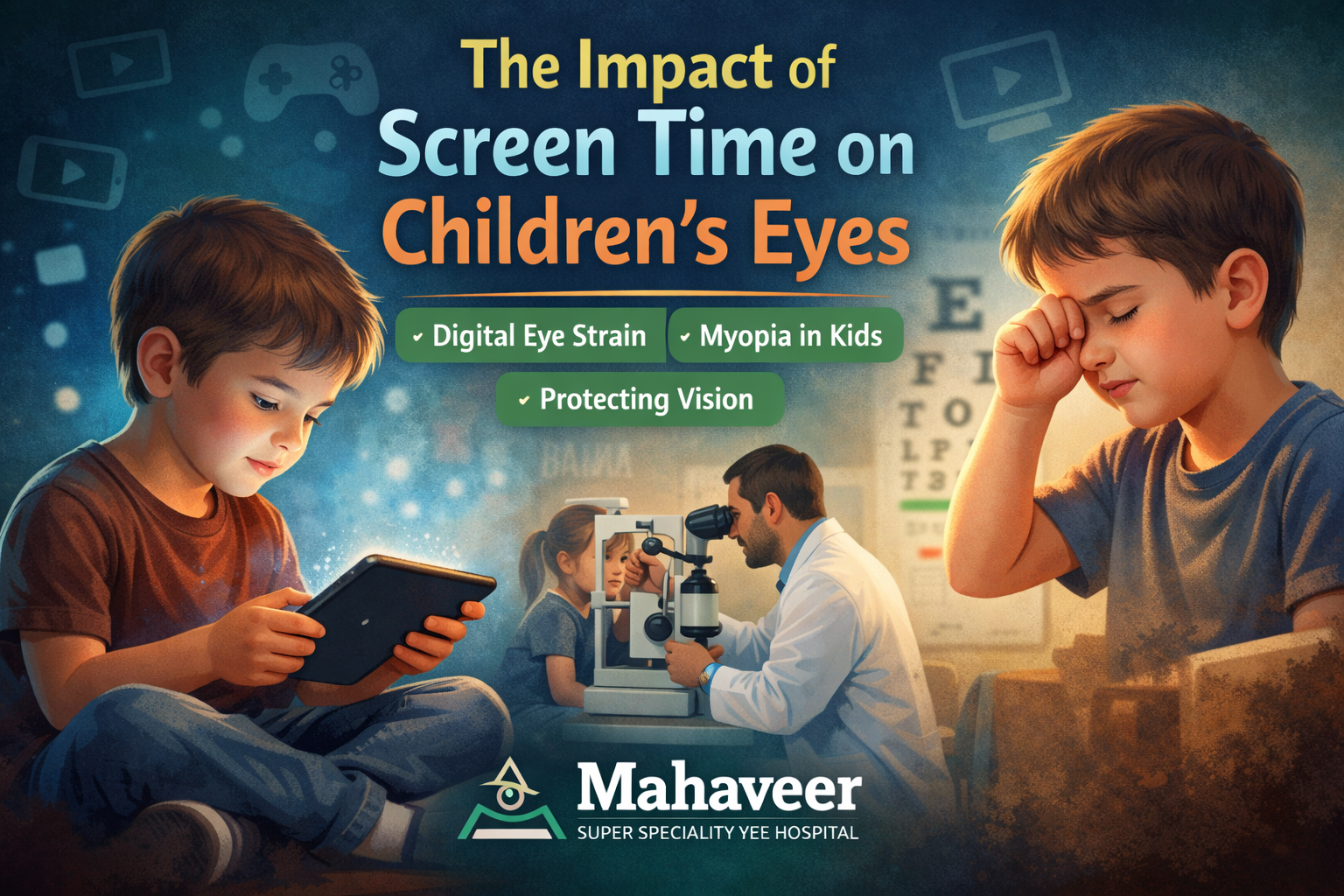
In today’s digital world, screens are everywhere. From online classes and homework to gaming and entertainment, children are spending more time than ever looking at digital devices. While technology has opened doors to learning and creativity, it has also introduced a growing concern for parents — the impact of excessive screen time on children’s eye health.
At Mahaveer Eye Hospital, we increasingly meet young patients experiencing vision problems linked to prolonged digital exposure. Understanding the early signs and preventive measures can protect your child’s eyesight for years to come.
The Rise of Digital Eye Strain in Children
Digital eye strain, also known as computer vision syndrome, is no longer an adult-only problem. Children as young as five are reporting symptoms such as:
- Frequent headaches
- Blurred vision
- Dry or watery eyes
- Eye rubbing
- Difficulty focusing
- Increased sensitivity to light
Unlike adults, children often do not realize their symptoms are abnormal. They may simply assume everyone sees the world the same way they do. That’s why regular eye examinations are crucial.
Why Are Children More Vulnerable?
Children’s eyes are still developing. Their focusing systems work harder when viewing close-up objects like smartphones and tablets. When a child spends long hours on screens without breaks:
- The eye muscles become fatigued.
- Blinking reduces significantly, leading to dryness.
- Near work increases the risk of developing myopia (nearsightedness).
Recent global trends show a sharp rise in childhood myopia. Experts believe increased indoor time and reduced outdoor play are major contributing factors.
The Myopia Epidemic: A Growing Concern
Myopia is more than just needing glasses. High levels of myopia increase the risk of serious eye conditions later in life, including:
- Retinal detachment
- Glaucoma
- Macular degeneration
Early detection and management can slow progression. At Mahaveer Eye Hospital, advanced diagnostic tools help monitor changes in children’s vision and recommend appropriate treatment strategies.
Warning Signs Parents Should Not Ignore
Children rarely complain directly about vision problems. Instead, look for subtle behaviors:
- Sitting very close to the TV
- Holding books too near
- Squinting frequently
- Poor academic performance
- Avoiding reading or homework
- Complaints of tired eyes
If you notice any of these signs, scheduling a comprehensive eye examination is essential.
How Much Screen Time Is Too Much?
While complete avoidance of screens is unrealistic, moderation is key. Pediatric experts recommend:
- No screen time for children under 2 (except video calls)
- 1 hour per day for ages 2–5
- Balanced, supervised screen use for older children
- Mandatory breaks every 20 minutes (20-20-20 rule)
The 20-20-20 Rule
Every 20 minutes, encourage your child to:
- Look at something 20 feet away
- For at least 20 seconds
This simple habit relaxes eye muscles and reduces strain significantly.
The Importance of Outdoor Play
Outdoor time plays a protective role against myopia. Natural light stimulates healthy eye development and reduces excessive near focusing.
Encourage at least 1–2 hours of outdoor play daily. Sports, cycling, walking, or simply playing in a park can make a measurable difference in long-term eye health.
Blue Light – Should Parents Be Concerned?
Digital screens emit blue light, which can disrupt sleep cycles and cause discomfort. While research is ongoing regarding long-term retinal damage, excessive exposure — especially before bedtime — can interfere with melatonin production and sleep quality.
Practical tips include:
- Avoid screens at least 1 hour before bedtime
- Use night mode settings
- Ensure proper room lighting while using devices
- Maintain appropriate screen distance (at least arm’s length)
If necessary, blue light protective glasses may be recommended after professional evaluation.
The Role of Proper Eye Examinations
School screenings are helpful but not sufficient. A detailed eye examination checks:
- Visual acuity
- Eye alignment
- Focusing ability
- Retinal health
- Early signs of myopia progression
At Mahaveer Eye Hospital, pediatric eye assessments are conducted in a child-friendly environment to ensure comfort and accurate diagnosis.
Managing Childhood Myopia
If your child is diagnosed with myopia, early intervention can slow its progression. Treatment options may include:
- Prescription glasses
- Special myopia-control lenses
- Lifestyle modifications
- Regular monitoring
Customized treatment plans ensure the best possible visual outcome.
Creating a Vision-Friendly Home Environment
Parents can adopt simple changes at home:
- Ensure proper lighting during study time
- Encourage upright posture
- Limit device usage in dark rooms
- Promote regular eye breaks
- Schedule annual eye check-ups
Consistency is more important than perfection. Small daily habits build lifelong eye health.
When Should the First Eye Check-Up Happen?
Children should ideally have:
- First eye check-up at 6 months
- Second check-up at 3 years
- Annual exams once school begins
Early examinations help detect amblyopia (lazy eye), refractive errors, and alignment issues before they affect academic performance.
The Long-Term Impact of Ignoring Vision Issues
Untreated vision problems can lead to:
- Poor school performance
- Reduced confidence
- Behavioral issues
- Permanent visual impairment
Children depend heavily on visual input for learning. Protecting their eyesight directly supports their educational and social development.
Why Choose Mahaveer Eye Hospital for Pediatric Eye Care?
Mahaveer Eye Hospital combines advanced technology with compassionate care. The pediatric ophthalmology team focuses on:
- Accurate diagnosis
- Personalized treatment
- Preventive education for parents
- Long-term monitoring of visual development
With modern diagnostic systems and experienced specialists, the hospital ensures that every child receives comprehensive and gentle care.
Parents trust Mahaveer Eye Hospital not only for treatment but also for guidance in protecting their child’s future vision.
Final Thoughts
Technology is here to stay — and it offers incredible opportunities for children. However, balanced use and proactive eye care are essential to prevent long-term vision problems.
As a parent, your awareness and action can make all the difference. Encourage outdoor play, limit unnecessary screen time, follow the 20-20-20 rule, and most importantly, never skip regular eye check-ups.
Healthy eyes today mean a brighter tomorrow.
If you notice any signs of vision discomfort in your child, consider scheduling a professional evaluation at Mahaveer Eye Hospital. Early care is the key to lifelong clarity.

